Tarot Beginner's Guide · Part 1
What Is Tarot?
Tarot is not a machine that predicts the future. It is a language made of pictures, and knowing where it came from makes it easier to use with a clear head.
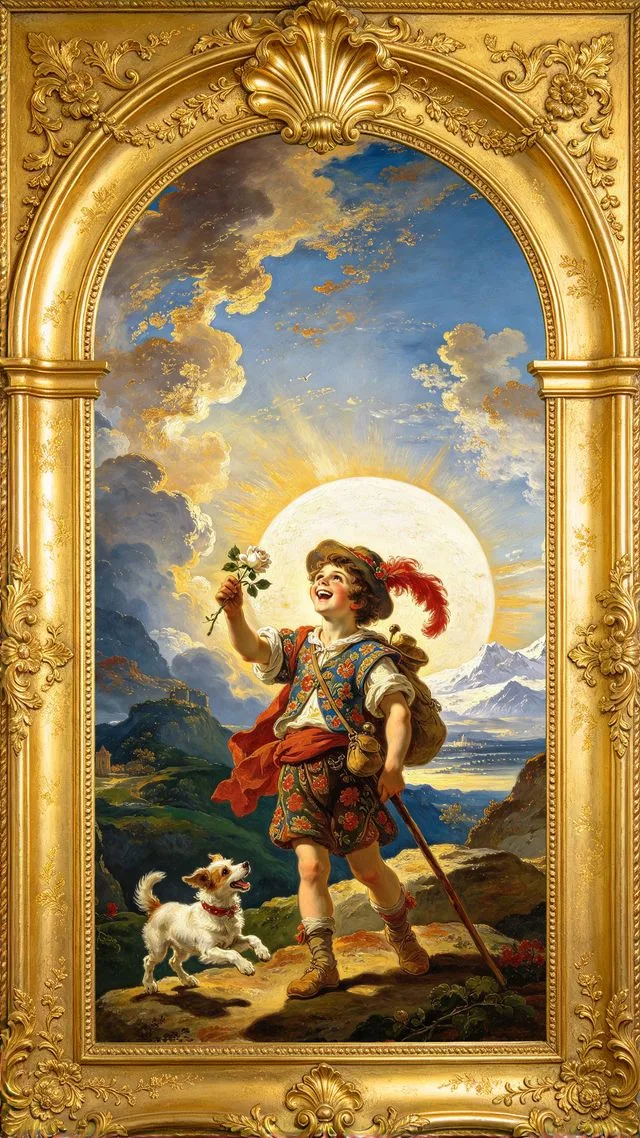
What is in a tarot deck
A standard tarot deck has 78 cards in two groups: 22 Major Arcana and 56 Minor Arcana. The Major Arcana are numbered trump cards such as The Fool, The Magician, Death and The World, and they deal with the big themes and turning points of a life.
The Minor Arcana are split into four suits: Wands, Cups, Swords and Pentacles. Each suit has numbered cards from Ace to Ten plus four court cards (Page, Knight, Queen and King). These cards tend to describe everyday feelings, actions, thoughts and practical circumstances.
Every card is a picture. The figures, gestures, colours and symbols all carry meaning, so reading tarot is really the practice of reading images and connecting them to your question.
From card game to reading tool
Tarot first appeared in northern Italy in the fifteenth century, where it was known as tarocchi and played as a card game by noble families. Hand-painted decks commissioned by the Visconti and Sforza families of Milan are among the oldest that survive. Nobody used them to tell fortunes.
In 1781 the French scholar Antoine Court de Gébelin wrote that tarot preserved the lost wisdom of ancient Egypt. Historians have since shown that claim has no basis, but it brought tarot into the world of the occult, and French occultists soon began reading the cards for meaning.
In 1909 the London publisher Rider released a deck designed by the English occultist A. E. Waite and illustrated by the artist Pamela Colman Smith. Now called the Rider-Waite-Smith deck, it gave all 78 cards full scenes, including the numbered Minor Arcana, which made the cards far easier for beginners to read from the pictures alone. Most modern decks are based on it.
How people use tarot today
Most readers today treat tarot as a mirror, not a script with a fixed ending. The cards you draw do not decide your future. They offer a fresh angle on what you care about, what worries you, and what options you might be overlooking.
A common approach is to draw with a specific question in mind and then ask yourself, “What in my life does this card remind me of?” Often the answer is already there, and the card simply helps you put it into words.
Tarot is for entertainment and self-reflection. It is not a substitute for medical, legal or financial advice, so please talk to a qualified professional about important decisions in those areas.
The TarotDome deck
The 78 cards on TarotDome follow the structure and meanings of the 1909 Rider-Waite-Smith deck, repainted by AI in the style of Renaissance and Baroque ceiling frescoes. Each card has its own page with upright and reversed meanings and notes on the key symbols in the picture.
If you are completely new, start with The Fool. It is numbered zero and stands for a fresh beginning, which makes it a fitting first card to study.